Tutorial
Learn how to use PopLife through a practical case study on adaptive introgression in Iberian wolves. This tutorial introduces the main browser features while exploring a real population genomics dataset.
1. Overview
The PopLife genome browser is a powerful tool designed for population genomics exploration across multiple non-model species, including Canis lupus (wolves) and domestic dogs. In this hands-on tutorial, we will explore how PopLife can be used to detect adaptive introgression — the process by which beneficial alleles are transferred from one species (or population) to another through hybridization and become positively selected.
Our focus will be on the Iberian gray wolf (IBGW), one of the most genetically distinct wolf populations in Europe. Recent work by Sarabia et al. (2025) has shown that some Iberian wolves carry genetic variants introgressed from domestic dogs that appear to be under positive selection. These variants are located in genes related to neurological function, social behavior, and immune regulation.
This tutorial will walk you through:
- The biological background of wolf-dog interactions
- Identifying regions of interest using PopLife
- Visualizing population genetic statistics
- Interpreting evidence of selection and introgression
- Downloading and sharing data
- Exercises for hands-on practice
2. Background: Wolves, Dogs, and Genetic Exchange
Wolves (Canis lupus) and dogs (Canis lupus familiaris) diverged approximately 15,000–40,000 years ago, but opportunities for gene flow have continued ever since. Especially in regions with small and isolated wolf populations (like the Iberian Peninsula), occasional hybridization with dogs has occurred. While much of this gene flow is considered neutral or even maladaptive, some dog-derived alleles may confer selective advantages in wolves. This is the basis of adaptive introgression.
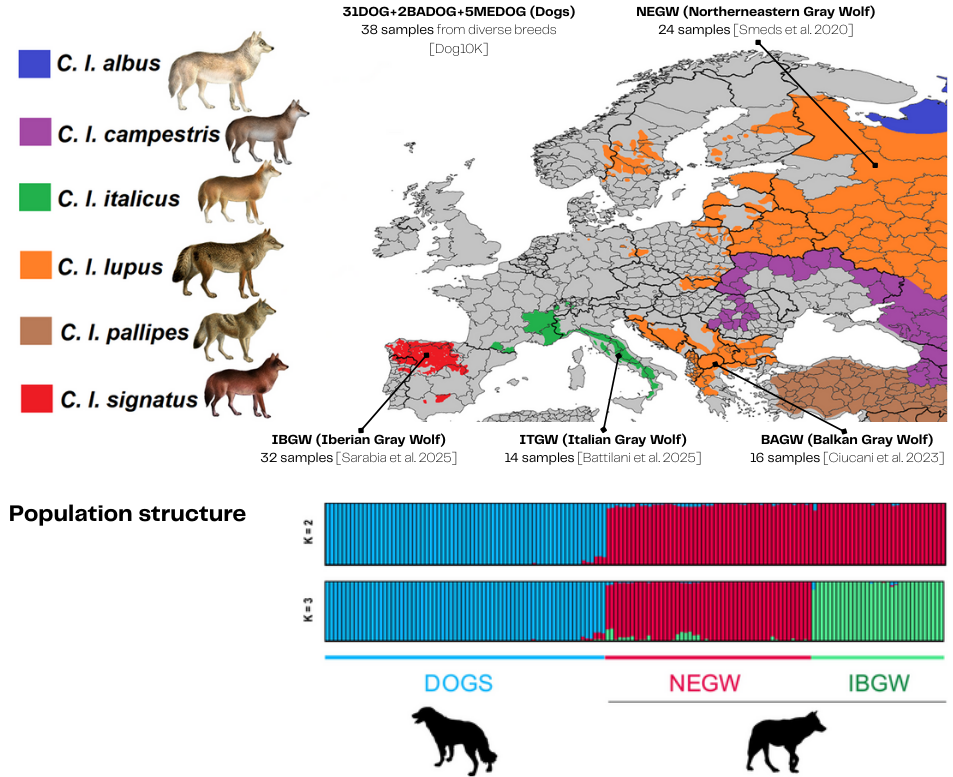
In Sarabia et al. (2025), researchers sequenced the genomes of Iberian wolves and found specific regions where introgressed dog haplotypes have risen in frequency in the IBGW population, suggesting positive selection. These include genes like:
- CDH13 and PCDH9: involved in brain function and social behavior, including neural differentiation and cell adhesion in neural tissues
- DAPP1, NSMCE4A and MPPED2: associated with innate immune response, inflammation, and responses to DNA damage
- MBTPS1: associated with lipid homeostasis, lysosomal function and melanin production
By combining population structure analyses, local ancestry inference, and selection scans (XP-EHH, XP-nSL), the study provided compelling evidence of selection on dog-derived variants in Iberian wolves.
3. Step-by-Step Guide
1. Launch PopLife and Select Your Species
- Open the PopLife genome browser at https://poplife.omicsuab.org
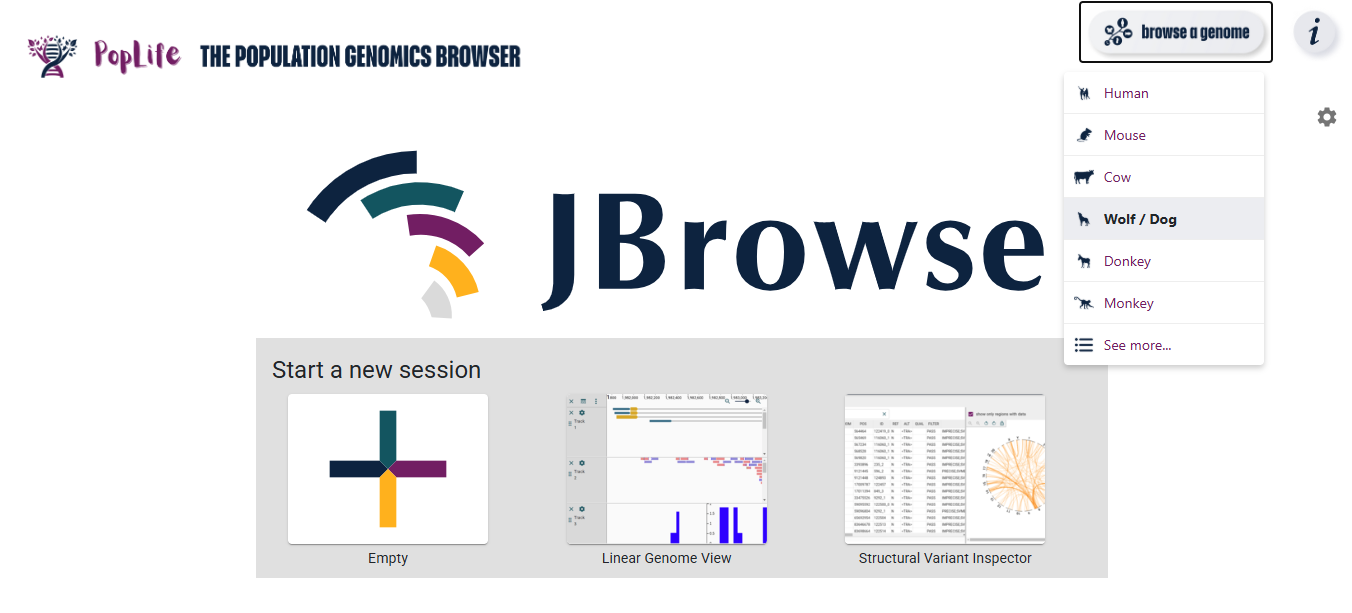
- Click the button
 on the top-right corner, and select:
  Wolf / Dog
2. Populations of study
- We will focus on the IBGW (Iberian Gray Wolf) population
- We will also visualize other Gray Wolf populations or DOGS as a comparison
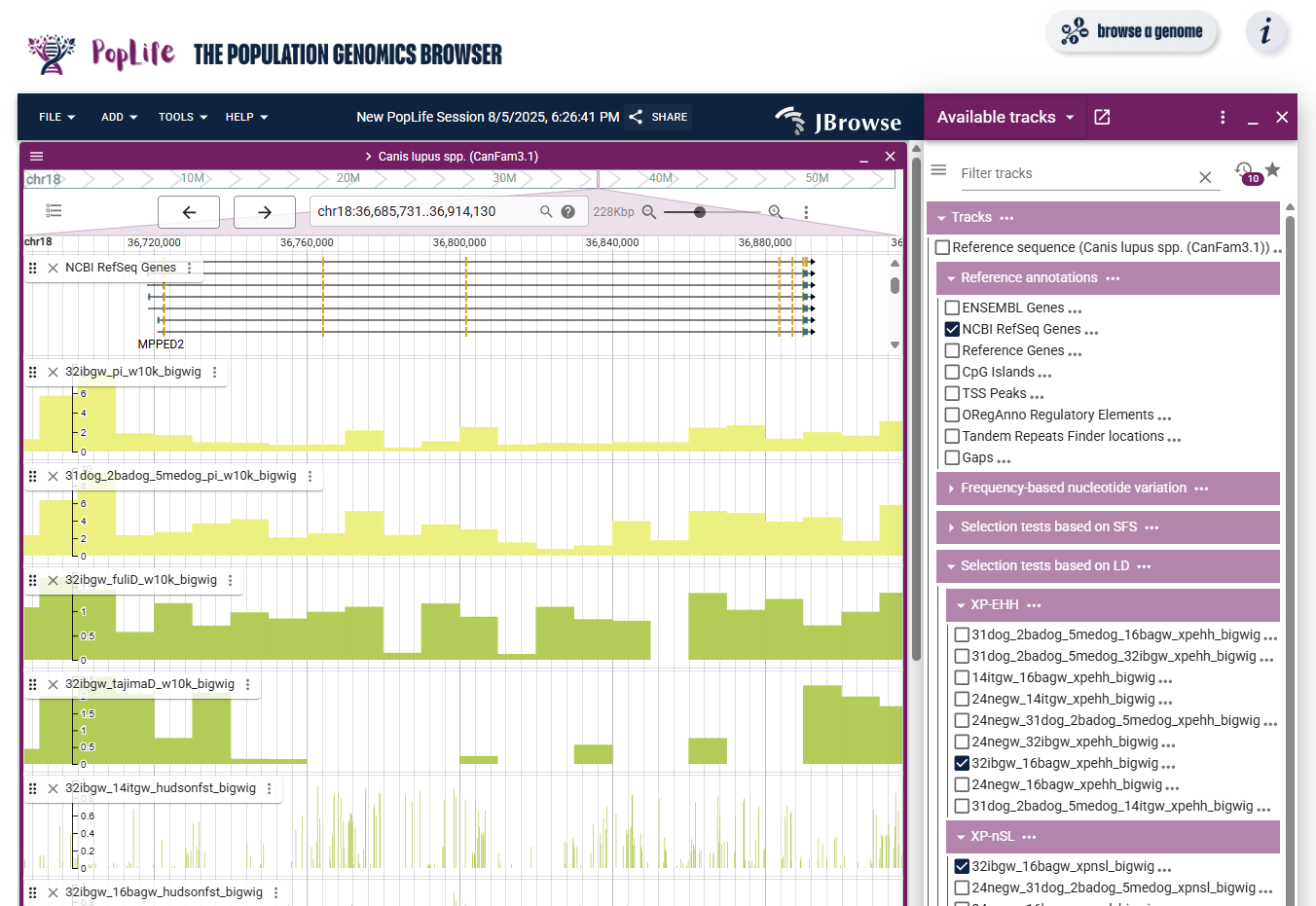
3. Visualize a Region of Interest: MPPED2
- In the coordinate bar, enter:
chr18:36,685,635-36,914,034 - Use the right menu to turn on the following tracks:
- Reference annotations: NCBI RefSeq Genes
- NCBI RefSeq Genes
- Frequency-based variation: Pi (for the IBGW and DOGS populations in 10k windows)
- 32ibgw_pi_w10k_bigwig
- 31dog_2badog_5medog_pi_w10k_bigwig
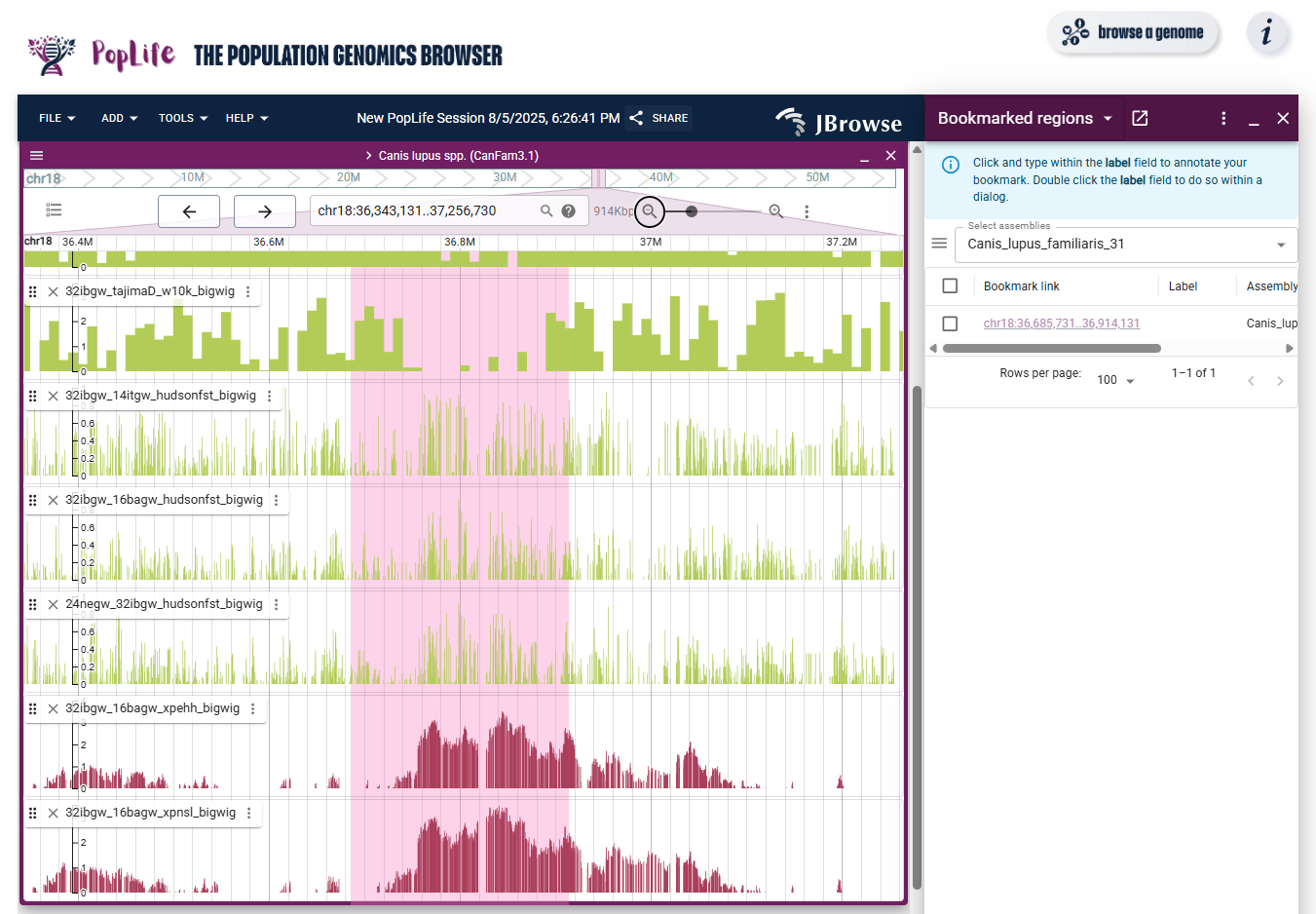
- Selection tests based on SFS: Fu & Li's D, Tajima's D (for the IBGW population in 10k windows); Hudson's FST (for the IBGW population vs. ITGW/BAGW/NEGW populations)
- 32ibgw_fuliD_w10k_bigwig
- 32ibgw_tajimaD_w10k_bigwig
- 32ibgw_14itgw_hudsonfst_bigwig
- 32ibgw_16bagw_hudsonfst_bigwig
- 24negw_32ibgw_hudsonfst_bigwig
- Selection tests based on LD: XP-EHH, XP-nSL (for the IBGW population vs. BAGW population)
- 32ibgw_16bagw_xpehh_bigwig
- 32ibgw_16bagw_xpnsl_bigwig
4. Bookmark the region and zoom out
- Click the hamburger-menu in the top-left corner of the browser
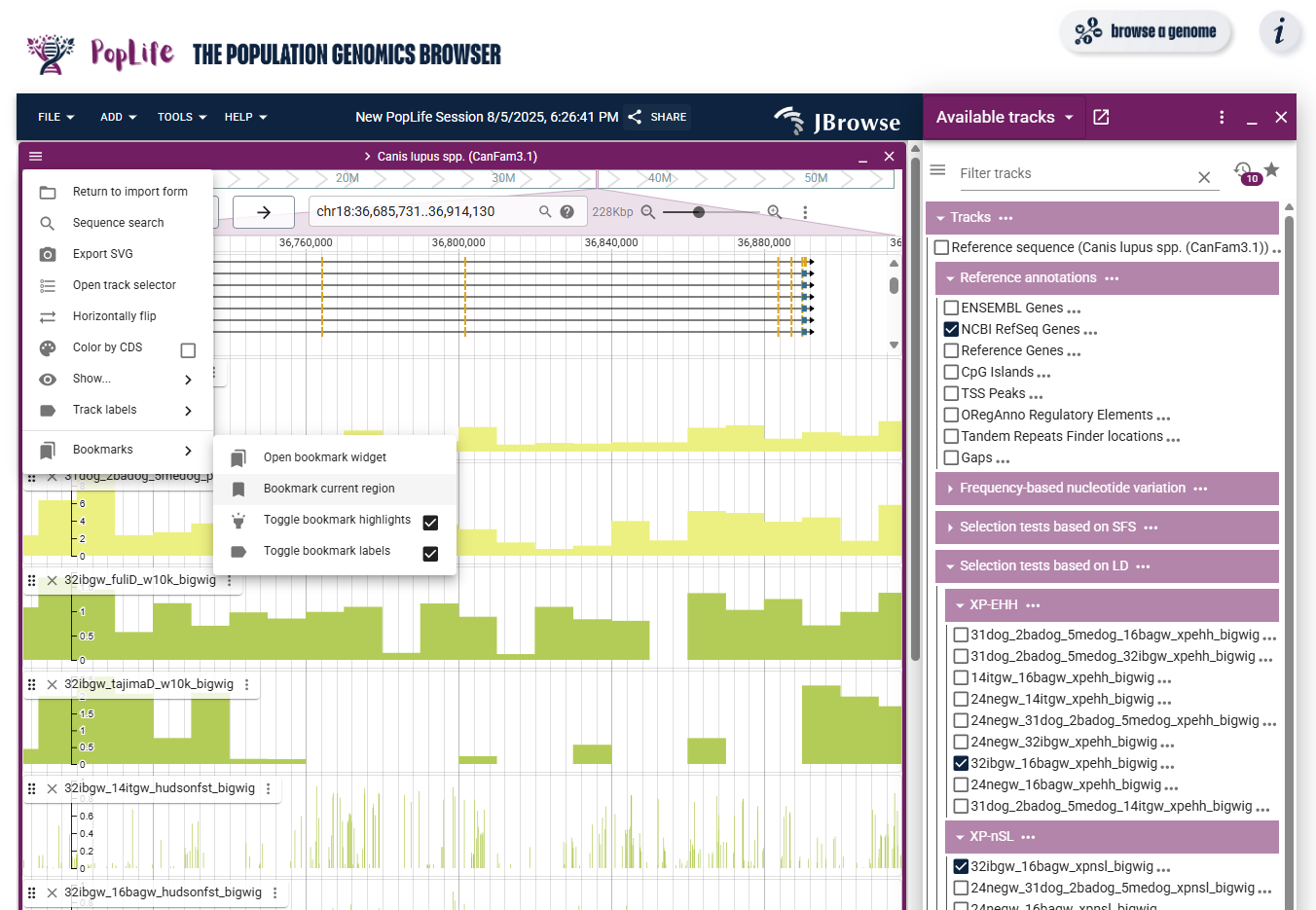
- Choose Bookmarks > Bookmark current region; a pink background will highlight the region
- Zoom out by clicking the magnifying glass with a minus sign inside, twice; a larger genomic region will be displayed
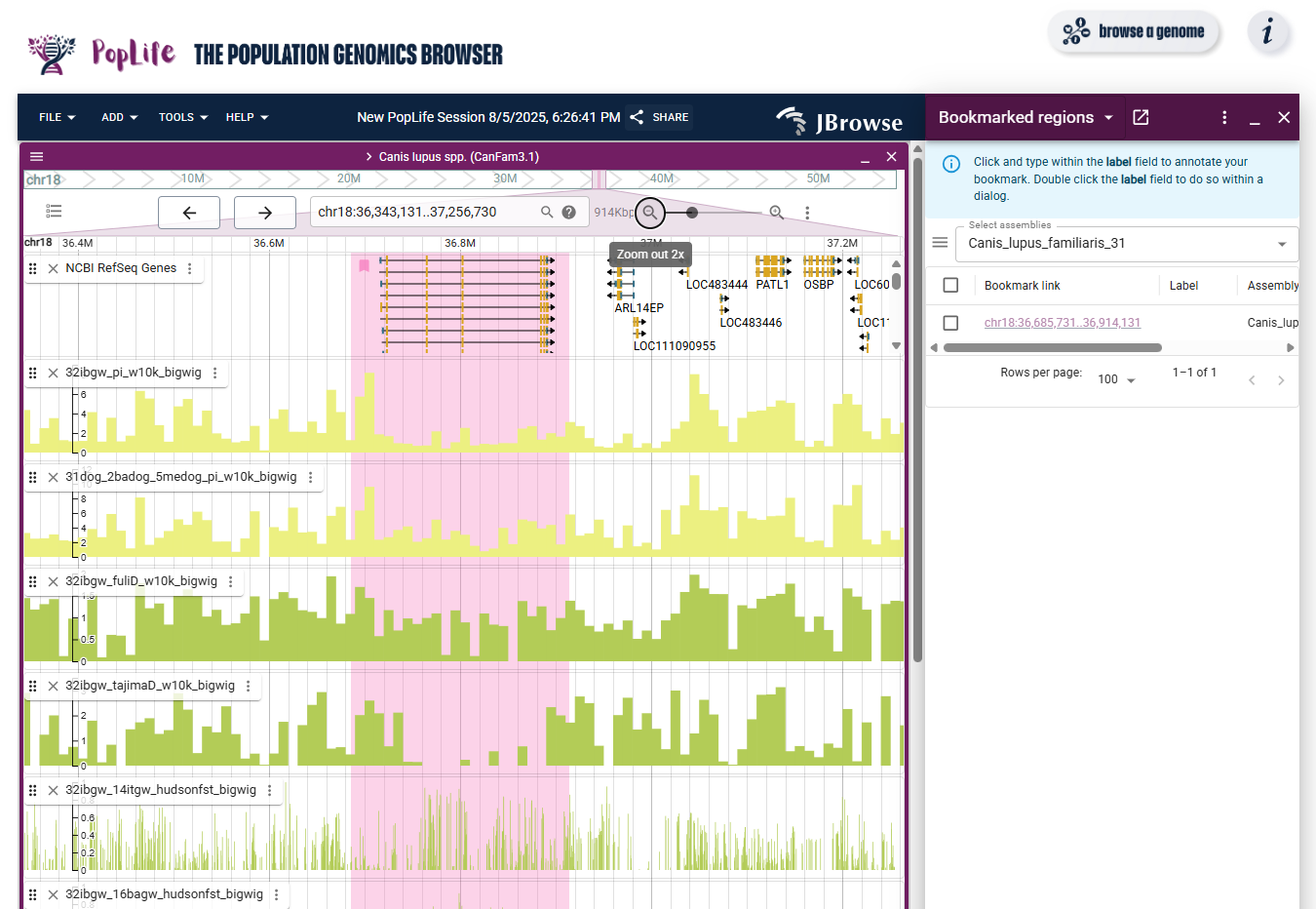
5. Interpret the Patterns
- Reduced nucleotide diversity (Pi) in IBGW relative to dogs
- Negative Fu & Li's D or Tajima’s D in IBGW relative to dogs: indicating an excess of rare alleles
- Elevated Hudson's FST between IBGW and other wolves or dogs: population differentiation
- High XP-EHH or XP-nSL in IBGW vs other wolves or dogs: consistent with selective sweeps
4. Downloading and Sharing Data
Download Track Data
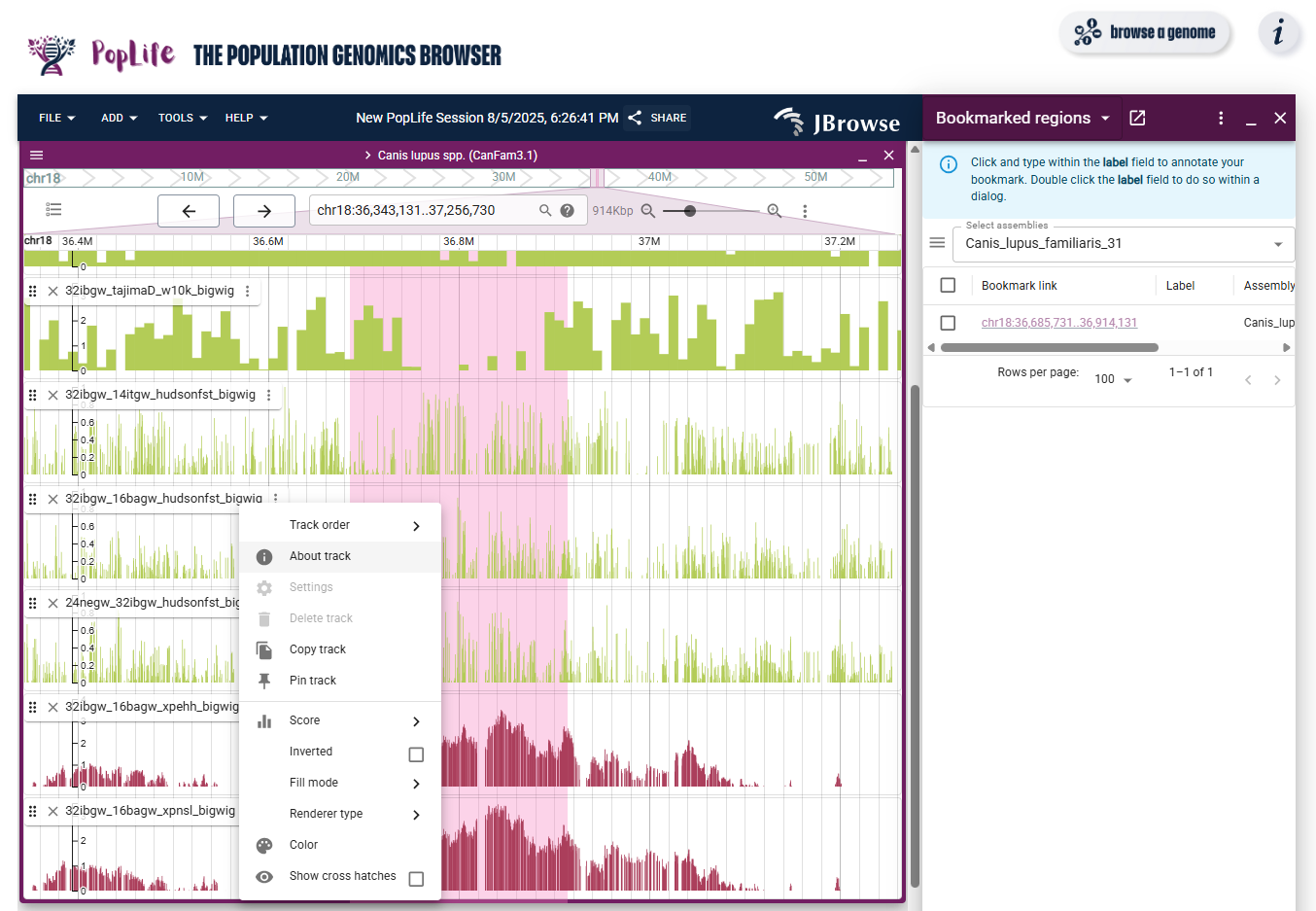
To download track data for a specific region of the genome:
- Click the three dots that appear next to the track name.
- Select “About track”.
- In the popup window, click the link to the track location within the PopLife server.
- The file will be downloaded to your computer.
Adding Custom Tracks via URL
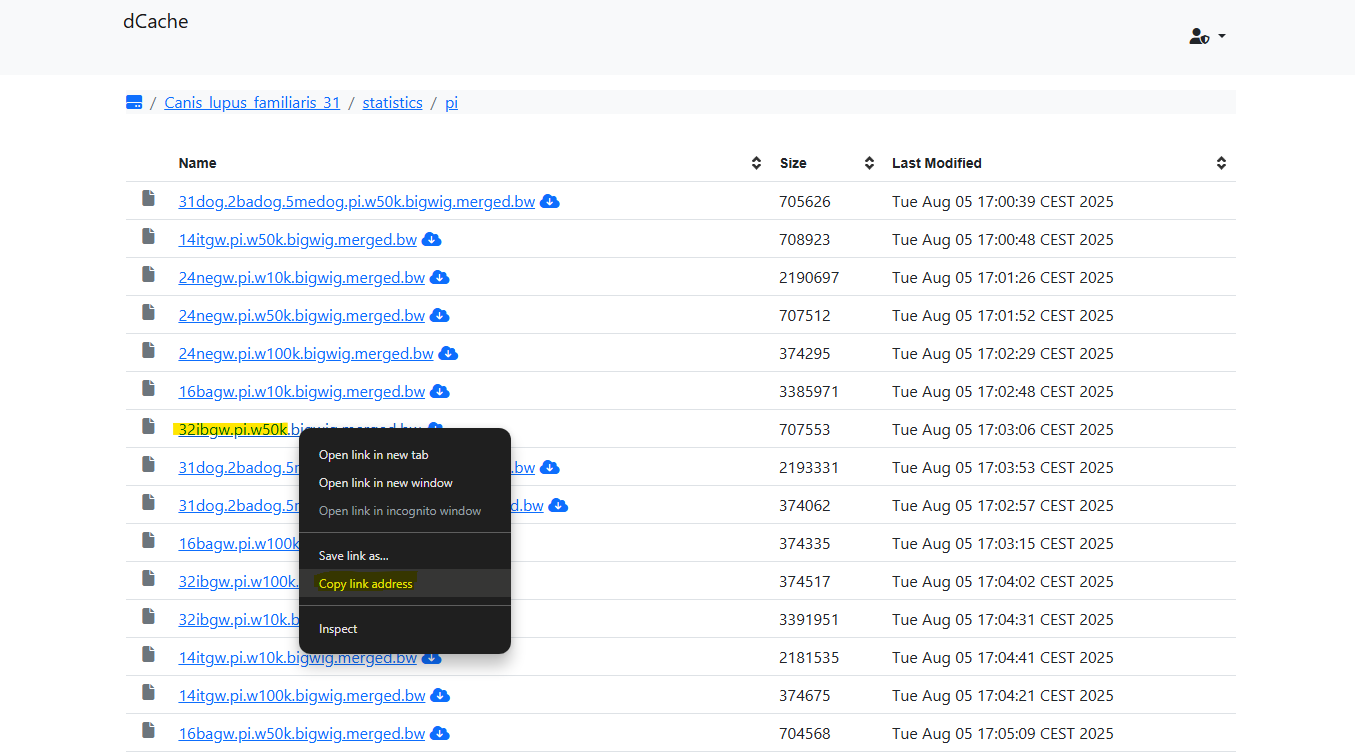
The PopLife server hosts additional tracks that are not loaded in the browser by default. However, you can navigate them and add them to your current session:
- Find additional tracks from the
 Download data menu, accessible from the information button at the top-right corner of the page.
E.g., we may add Nucleotide diversity (pi) for 50k windows in IBGW. The track is available from this URL:
https://poplife.pic.es/tracks/Canis_lupus_familiaris_31/statistics/pi/32ibgw.pi.w50k.bigwig.merged.bw
Download data menu, accessible from the information button at the top-right corner of the page.
E.g., we may add Nucleotide diversity (pi) for 50k windows in IBGW. The track is available from this URL:
https://poplife.pic.es/tracks/Canis_lupus_familiaris_31/statistics/pi/32ibgw.pi.w50k.bigwig.merged.bw

- Go back to your PopLife session.
- Go to the top menu bar of the browser and select "Open track...".
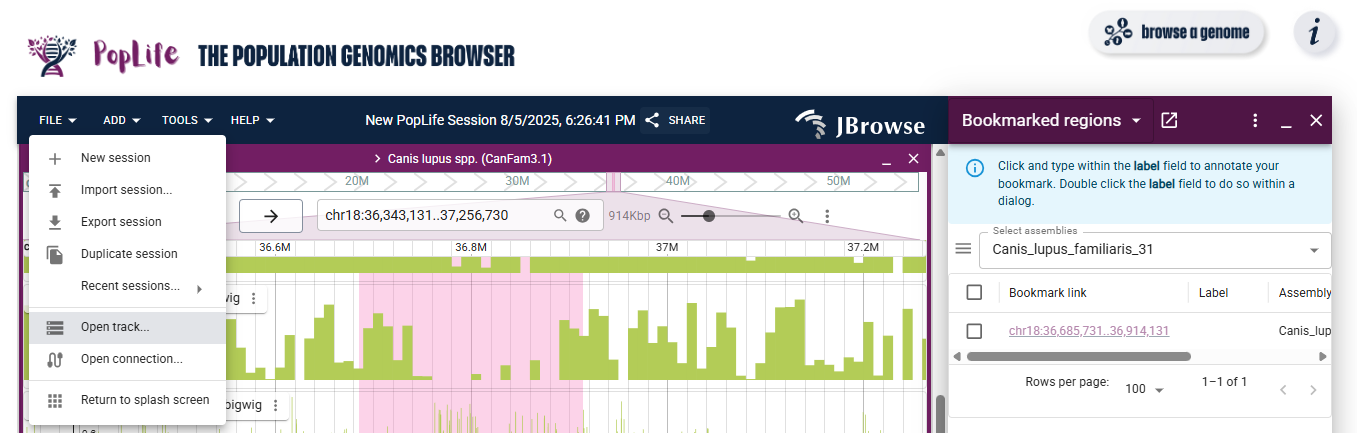
- Paste the full URL of your file on the "Enter track data > Main file > Enter URL".
- Click "NEXT".
- If not automatically guessed, choose BigWig adapter as "Adapter type" (or the suitable adapter according to the file format; in this example, .bw).
- Review the track configuration and click "ADD".
- The track will be displayed at the bottom of the visualization frame.
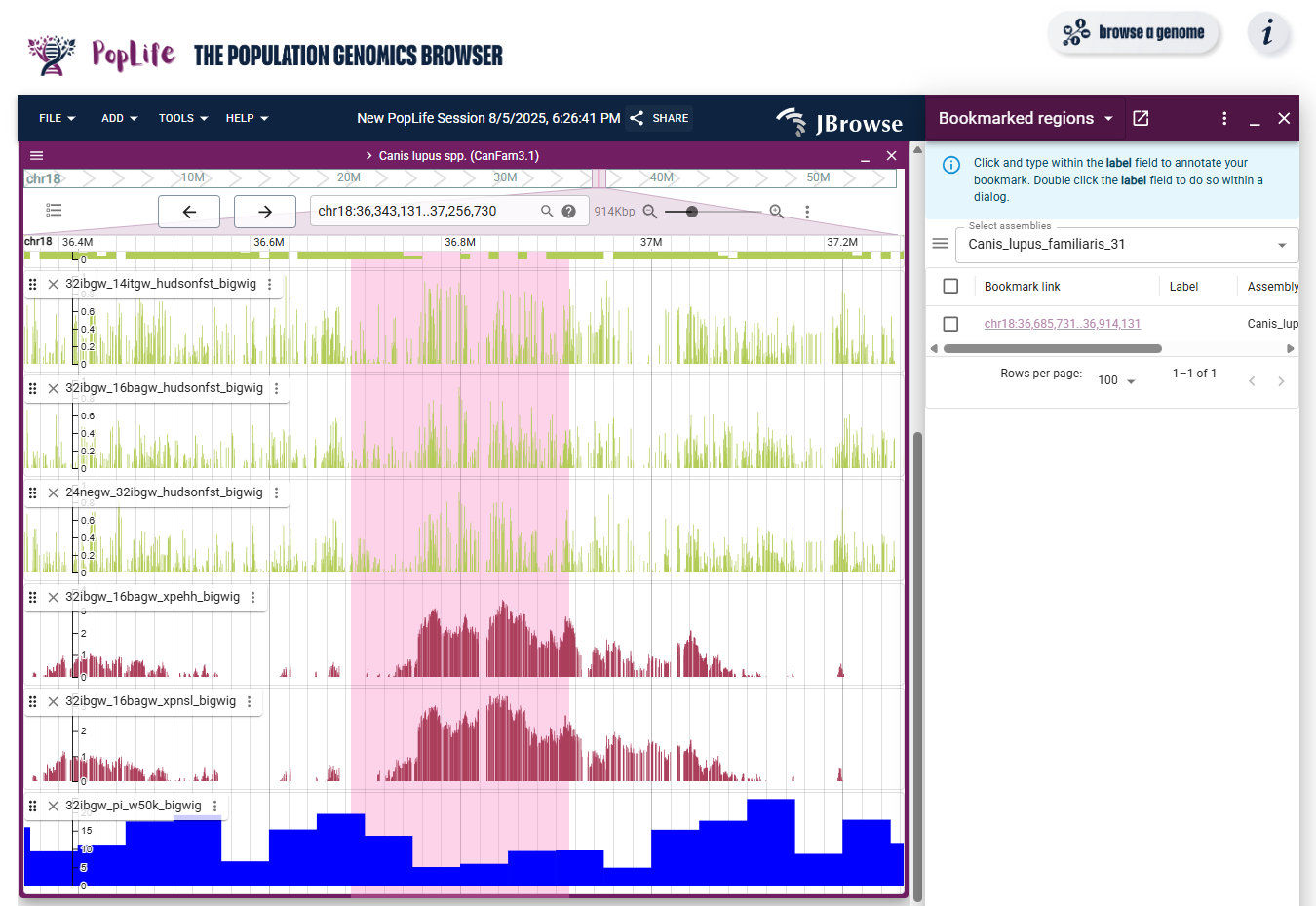
Saving and Sharing Your Browser Instance
To save your current browser configuration (zoom level, active tracks, highlighted region, etc.):
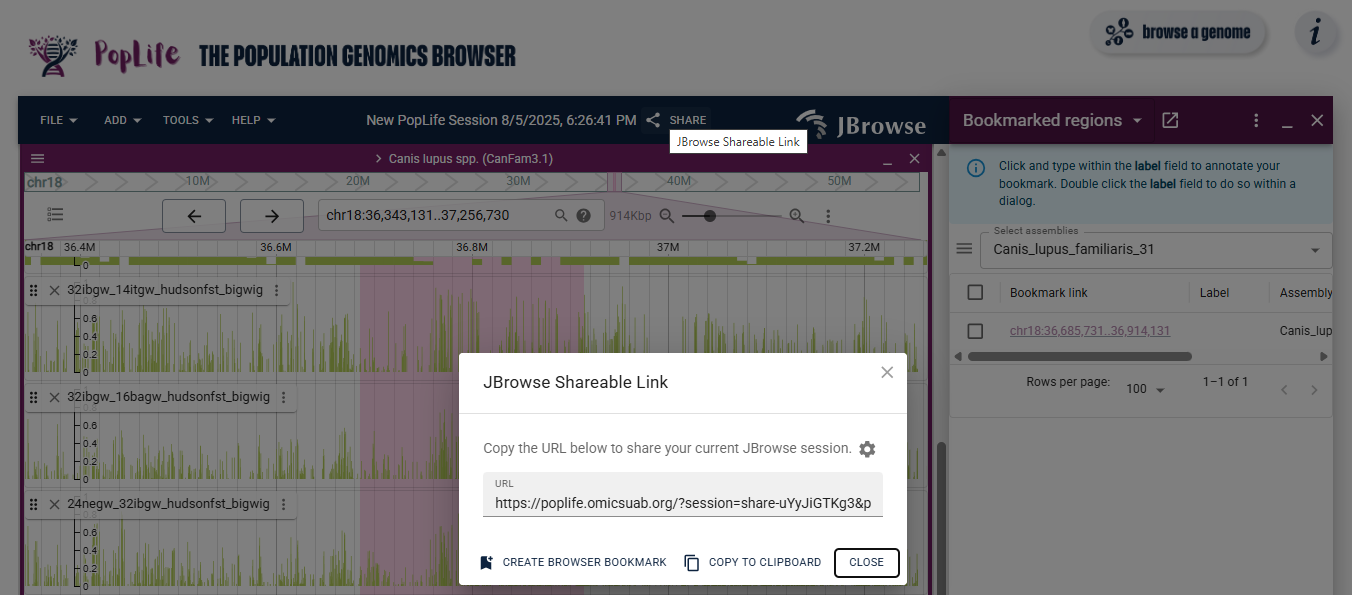
- Click the "SHARE" button in the top menu bar of the browser.
- Copy the automatically generated URL.
- You can paste this link to share your session with others.
Link to the session for this tutorial
5. Other Genes to Explore
Repeat the above analysis with the following genes:
| Gene | Coordinates (CanFam3.1) | Functional Category |
|---|---|---|
| CDH13 | chr5:68,832,009-69,512,503 | Neural differentiation |
| PCDH9 | chr22:21,262,288-22,249,505 | Cell adhesion in neural tissues |
| MBTPS1 | chr5:68,223,595-68,283,279 | Lipid homeostasis, lysosomal function and melanin production |
| DAPP1 | chr32:21,761,271-21,817,746 | Innate immune response, inflammation, and responses to DNA damage |
| NSMCE4A | chr28:31,709,039-31,724,989 | Innate immune response, inflammation, and responses to DNA damage |
| MPPED2 | chr18:36,685,635-36,914,034 | Innate immune response, inflammation, and responses to DNA damage |
6. Exercises
Exercise 1: Signature of Selection
- Choose one gene from the list and navigate to its genomic region
- Activate some tracks of interest
- Describe the pattern of variation and whether it supports recent positive selection
Exercise 2: Adaptive Introgression Detection
- Compare IBGW to DOGS in one gene region
- Focus on XP-EHH and XP-nSL signals
- Is the dog haplotype under positive selection in IBGW?
- What additional data would strengthen your conclusion?
Exercise 3: Hypothesis Formulation
- Choose your own gene relevant to behavior, metabolism, immunity, or any other functional category of interest
- Investigate its variation in wolves and dogs
- Propose a hypothesis: Has this gene been adaptively introgressed?
- Design a follow-up study
7. Wrap-up
This tutorial has introduced the concept of adaptive introgression and how population genomic tools in PopLife allow us to identify its signatures in wild canid genomes. The Iberian wolf presents a compelling case where natural selection may have favored specific dog-derived alleles, possibly influencing traits like immunity and behavior.
By integrating selection statistics, local ancestry inference, and comparative genomics, PopLife offers a window into evolutionary processes shaping natural populations. Happy exploring!
8. Further reading
Sarabia et al. (2025). Potential adaptive introgression from dogs in Iberian grey wolves. Molecular Ecology. DOI:10.1111/mec.17639